


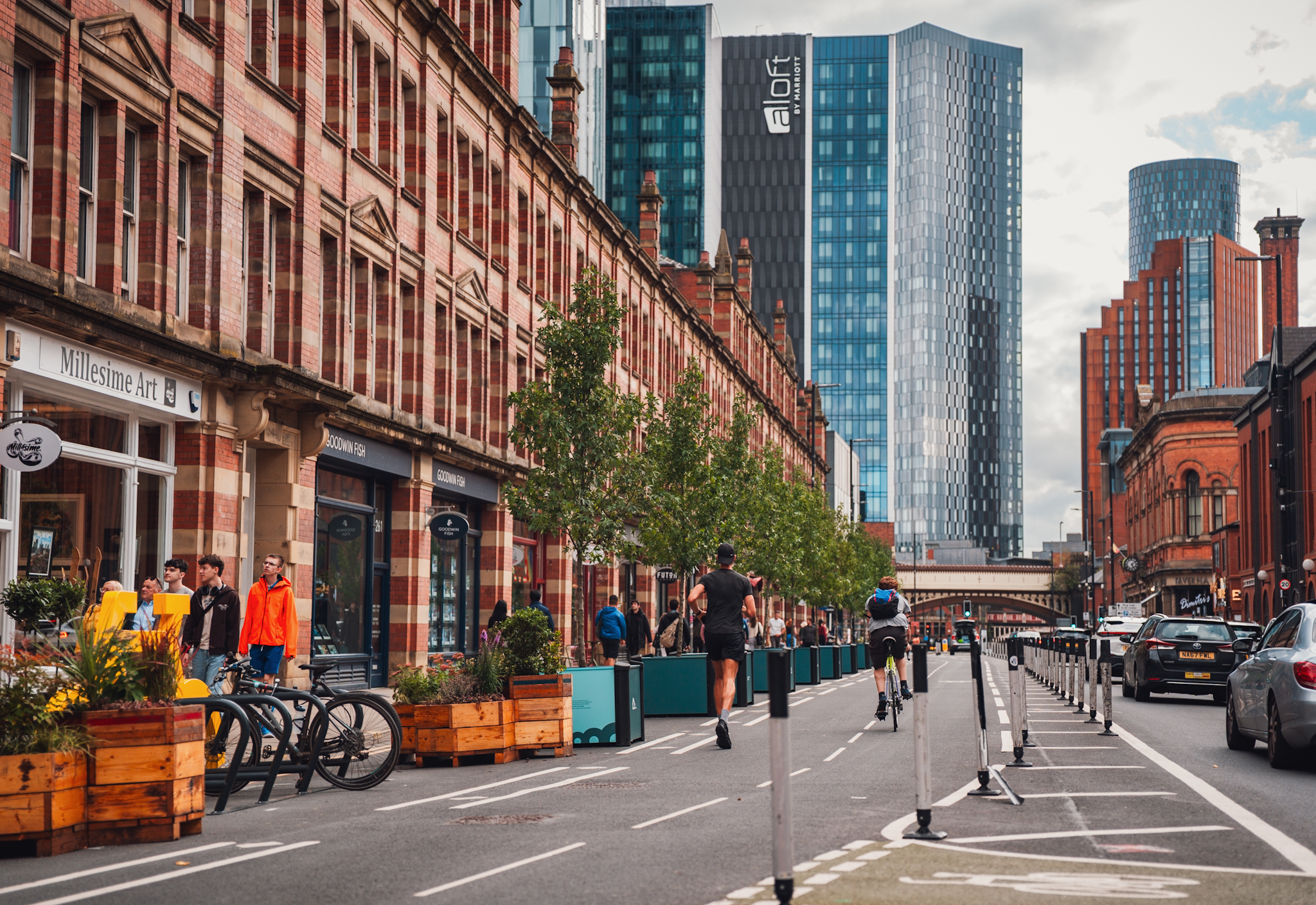
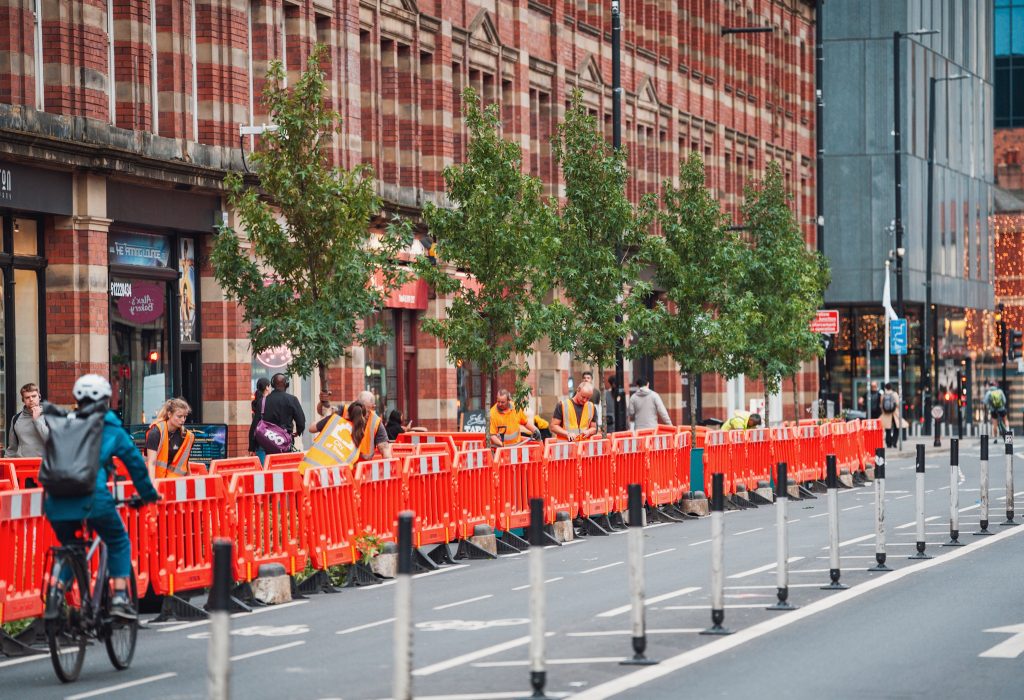
Our first CyanLines pop-up project kicked off in early September, bringing a big splash of nature and colour to Deansgate, one the city’s most recognised streets.
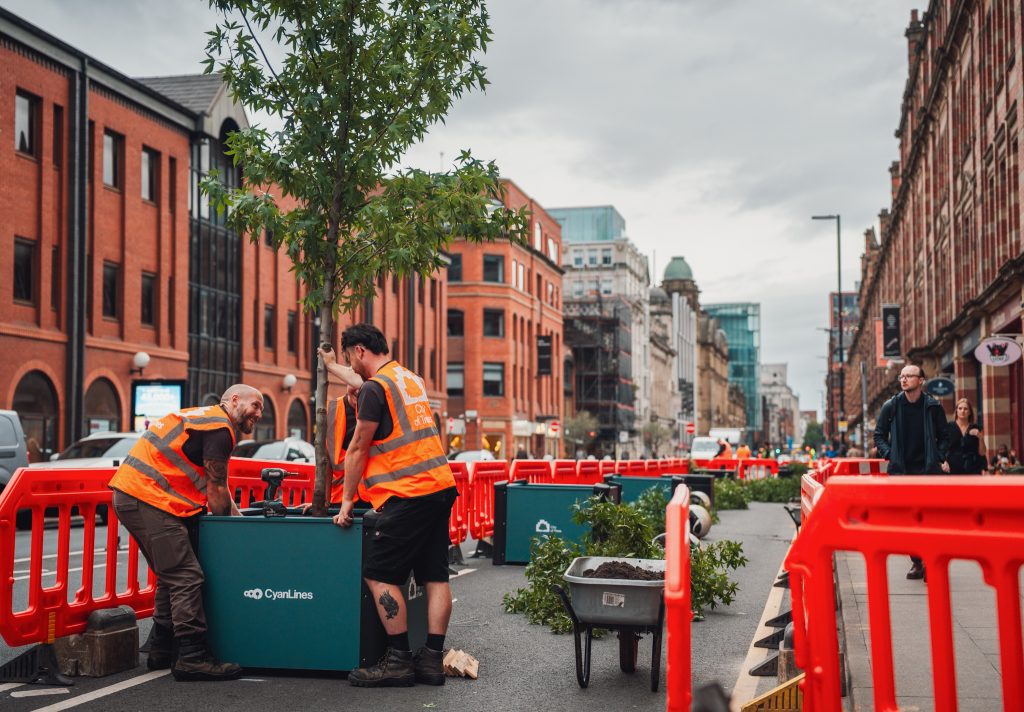
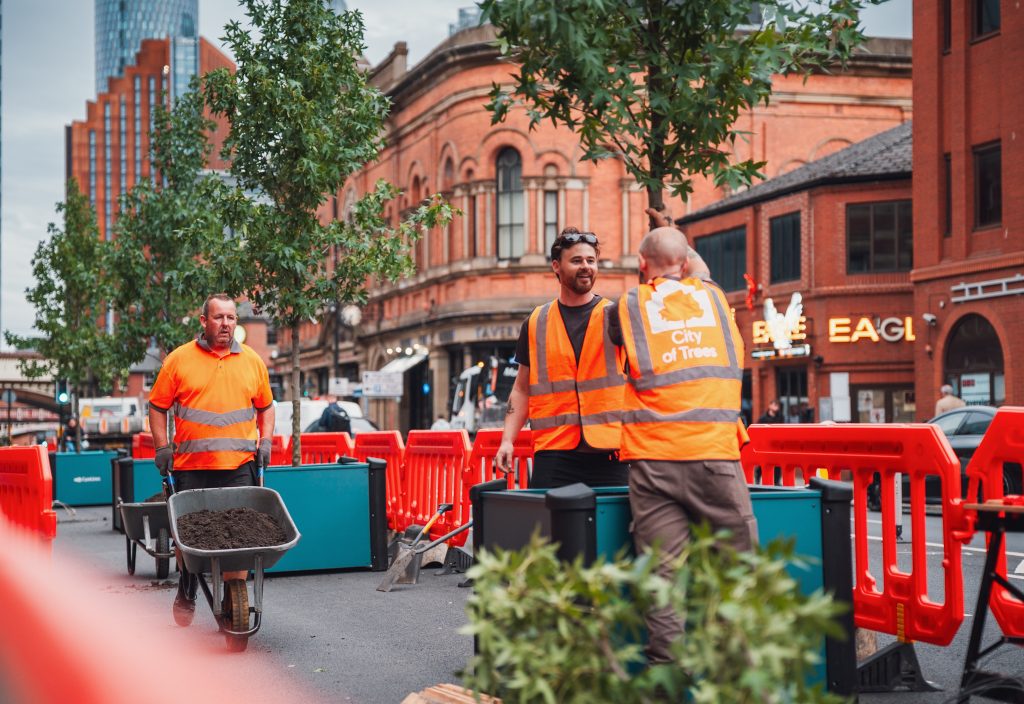
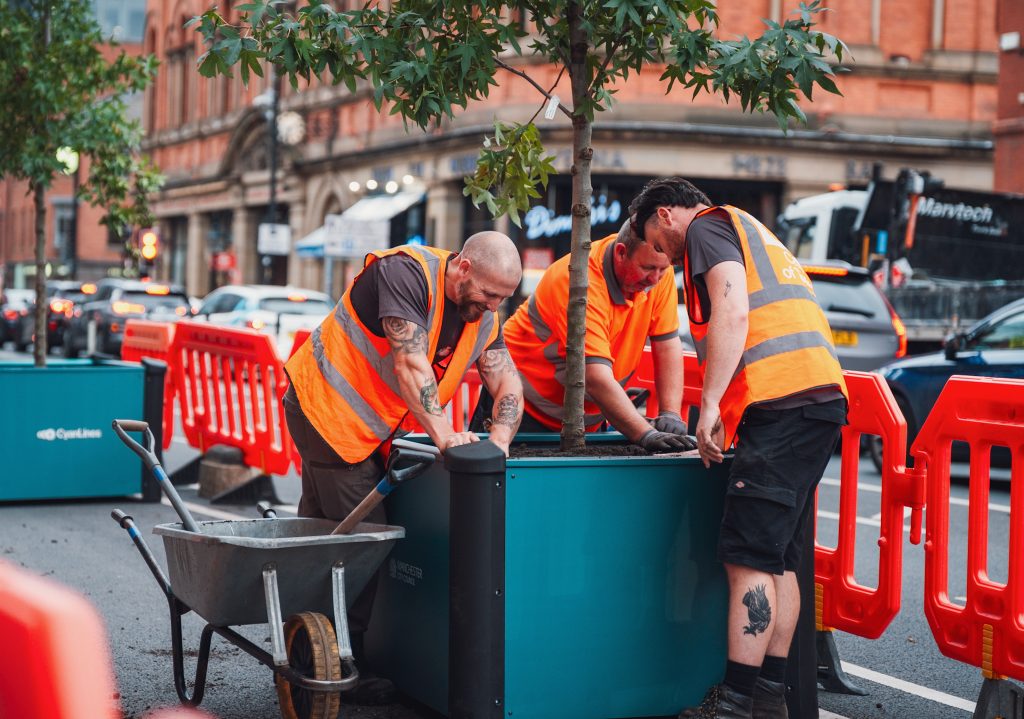
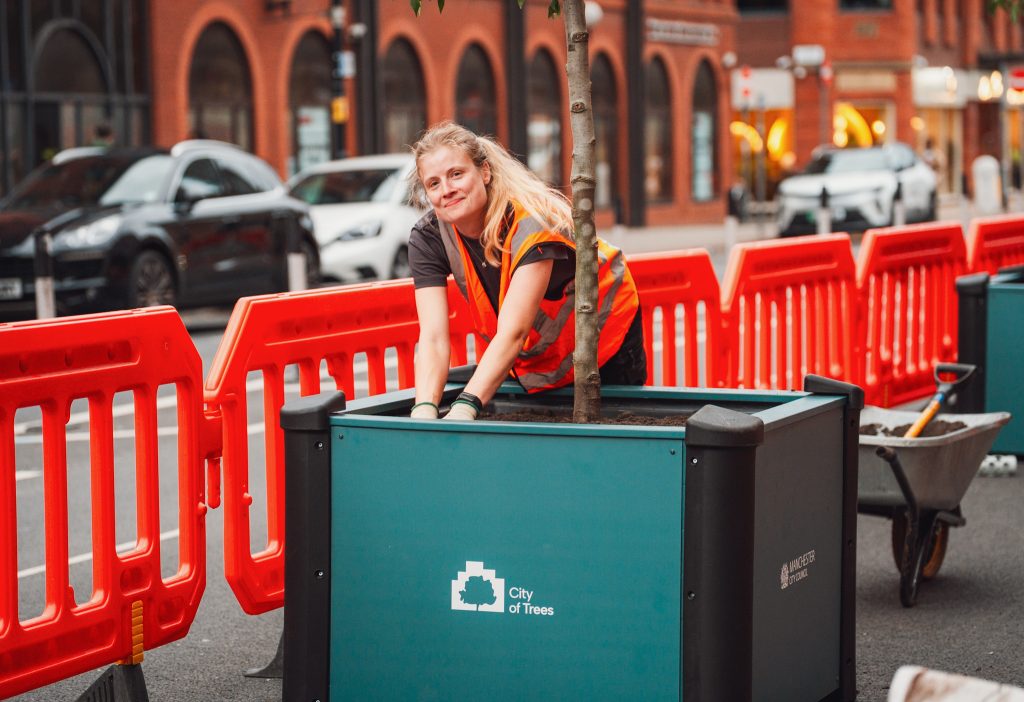
At its heart are twelve sweet gum trees, known for their striking autumn colours, which will make Deansgate their temporary home before they are planted into the ground at their forever homes in Greater Manchester next year.
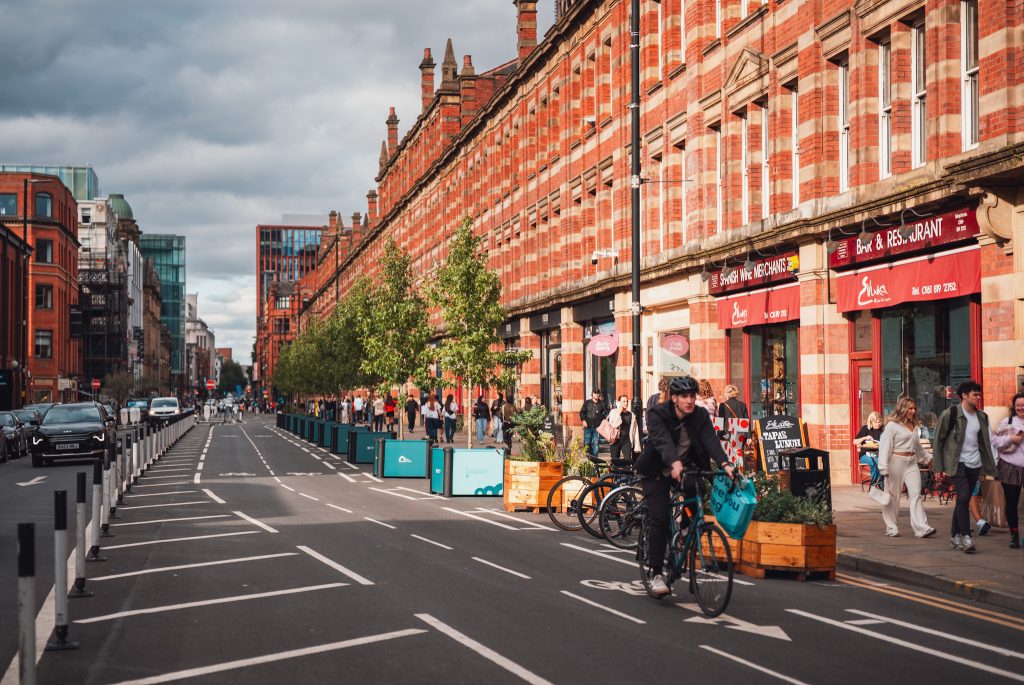
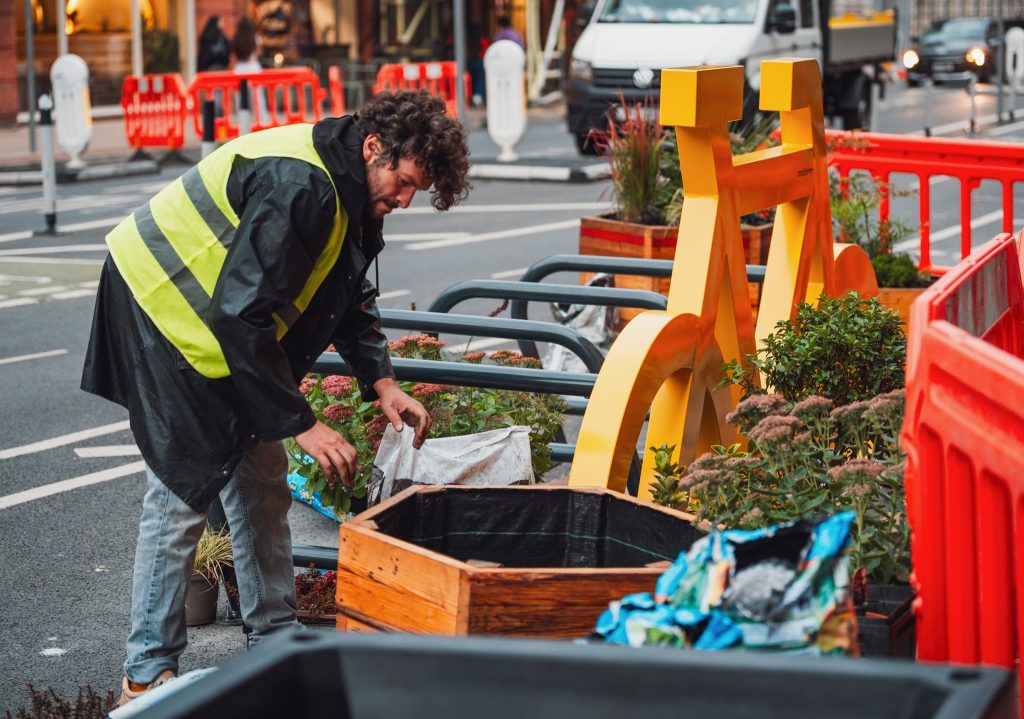
New brightly coloured cycle ports and hexagonal beehive shaped planters, featuring rescued and upcycled Manchester velodrome track, join the trees to complete the installation at the Great Northern Warehouse end of Deansgate.
The gum trees will be a 12-month installation and the first activation in this space. During this time residents and businesses have the chance to feedback and share their ideas for how we could use the space in the future.
We are excited to see the difference the trees and plants will make to the space and we hope it sparks your imagination into thinking about what else could be possible to bring more nature on to our city streets.
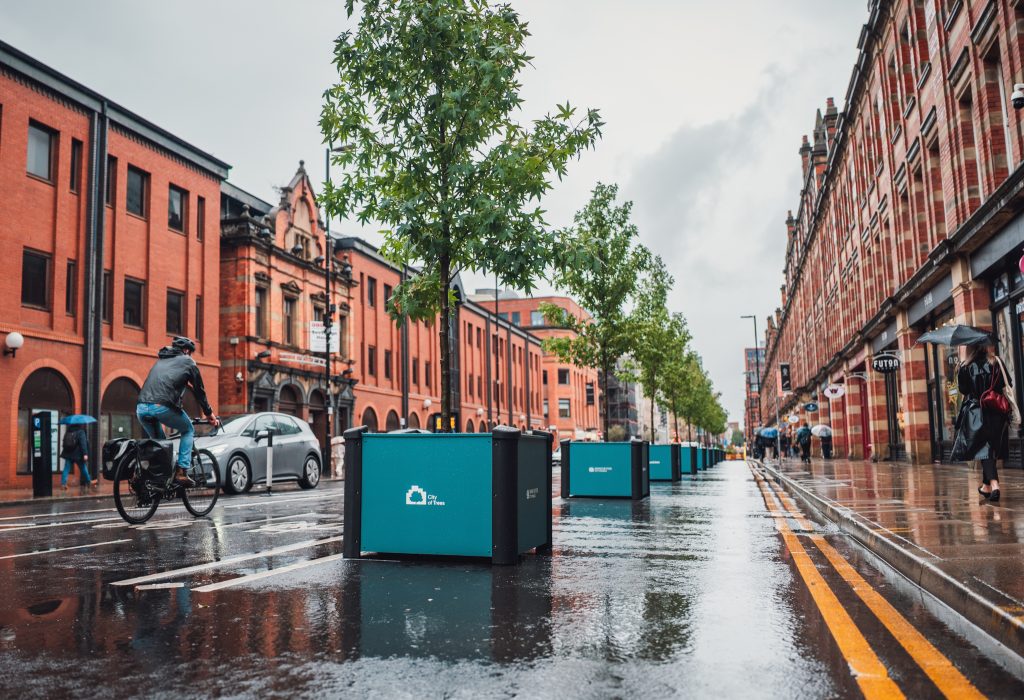
ALL ABOUT OUR TREES
The trees in our planters will be Liquidambar styraciflua, more commonly known as the sweet gum tree and here’s why they’ve been chosen for our project.
- In the Autumn, their dark green leaves change into dramatic shades of red and gold.
- The leaves stay on the trees usually until the end of November/early December.
- This species of tree loves living in Greater Manchester because it enjoys most weather conditions.
- They are used a lot for street tree planting projects because they grow tall and narrow so they don’t throw huge branches out across pavements and roads.
- They will cope living temporarily in the planters because they are a hardy tree.
- In the planters, the trees will be about 2.5 to 3 metres high and their canopy spread will be 1-1.5 metres.
- Next year, when the trees are planted into the ground, they could reach heights of 12-17 metres and grow between 8 and 10 metres wide.
- The trees grow quickly reaching maturity between 10 and 20 years. The trees in the planters are already between 12 and 14 years old.
Our trees have been specially chosen by the fantastic people at City of Trees. If you don’t know City of Trees, they are the Community Forest Greater Manchester. They plant trees for people; trees to create better, greener places; to boost health and wellbeing; to enhance green skills; and to tackle the climate and biodiversity emergency. Find out more and how you get involved with their many volunteer projects here: https://www.cityoftrees.org.uk/
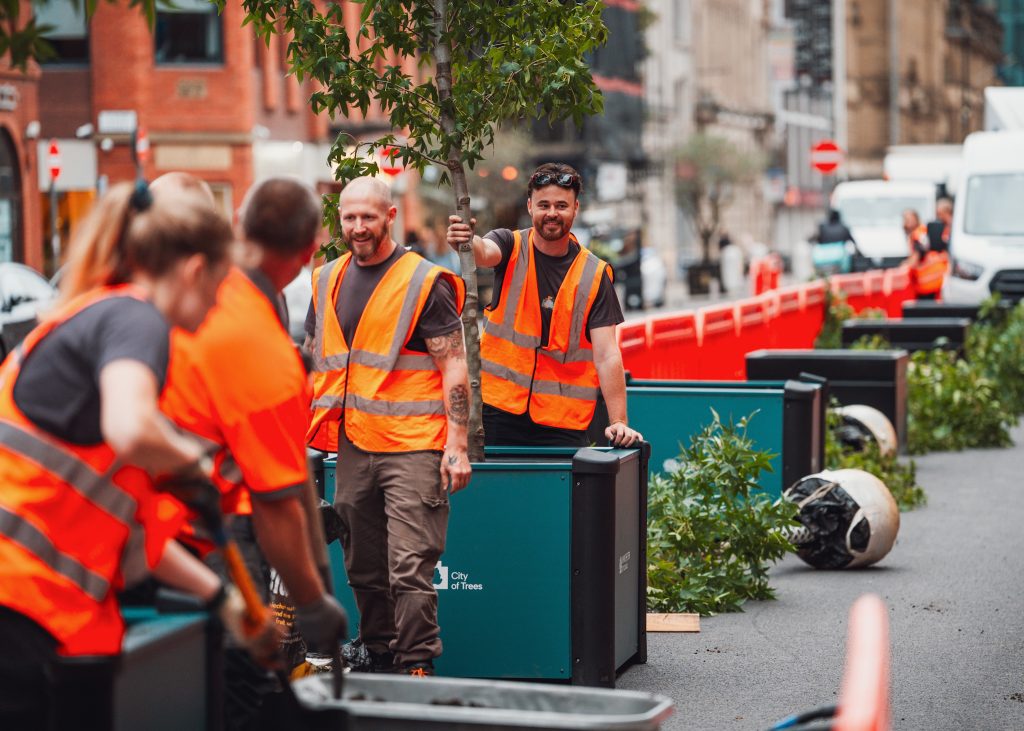
Ten great facts about trees in Greater Manchester
- Keep us cool
Trees are one of the most practical tools cities have to combat heat by offering both shade and cooling. The surface shaded by a tree canopy can be between 2 and 8 °C cooler than the same area exposed to direct sunlight.
Trees also cool the air by releasing water vapour through a natural process called evapotranspiration.
- CO2storage
As trees grow, they lock away carbon in their trunks, branches, and roots, keeping it out of the atmosphere for decades or even centuries. Just one mature tree can store several tonnes of CO2 over its lifetime. Right now, Greater Manchester’s trees store an estimated 1,573,013 tonnes of carbon between them!
- Oxygen production
We all depend on oxygen and trees produce it through photosynthesis, which we can measure. In Greater Manchester, our trees produce an estimated 122,450 tonnes of oxygen every year.
- Air Quality
Trees make a significant contribution to improving our air quality. They directly remove pollutants from the air by absorbing them through the leaf surfaces and by intercepting particulate matter like smoke, pollen, ash and dusts. Trees remove an estimated 847 tonnes of pollution from our air every year, a substantial contribution to keeping the city’s air breathable.
- Flooding
Trees act like a sponge and umbrella combined: their leaves catch rainfall and their roots help the ground soak up the rest, helping to ease pressure on our drains. Greater Manchester’s 11.3 million trees, with a combined leaf area of around 859 km², stop an estimated 1,644,415 m³ of rainwater from going into drains and that’s enough water to fill more than 657 Olympic-sized swimming pools.
- Mental Health and Wellbeing
Spending time around trees has been shown to reduce stress, lower blood pressure and boost mental wellbeing, while attractive tree-lined spaces encourage more walking and cycling.
- Wildlife
Trees, particularly in urban settings, provide habitats to encourage biodiversity – they act as homes for lots of wildlife including insects, birds and small mammals. Urban trees can serve as green corridors between larger areas of green space, giving creatures a safe path to travel through.
- Improving Places
Trees and woodlands create attractive environments that boost civic pride and create unique identities for towns and cities. Research has highlighted the ‘linger’ effect of trees in urban centres – people are more likely to use areas as leisure facilities and browse and shop in areas and streets lined with trees.
- Safer Cities
Trees lining our streets do more than look good, they subtly shape how people drive, particularly in our towns and cities. Their presence narrows the sense of open road, encouraging drivers to slow down, which makes streets safer and more accessible for pedestrians and cyclists.
- Connect us to our history and heritage
Trees can outlive the buildings around them, quietly witnessing decades of change in a neighbourhood. Many stand as living memorials or mark important moments in a community’s story, giving people a real connection to the past. For example, the Manchester poplar is synonymous with the region’s Industrial past due to it being able to tolerate the heavy smog and air pollution of the time.
All the data quoted above is taken from the City of Trees Urban Forest Plan and specifically the results of the i-Eco Tree Survey. You can read the full report here.
Reclaimed and recycled planters
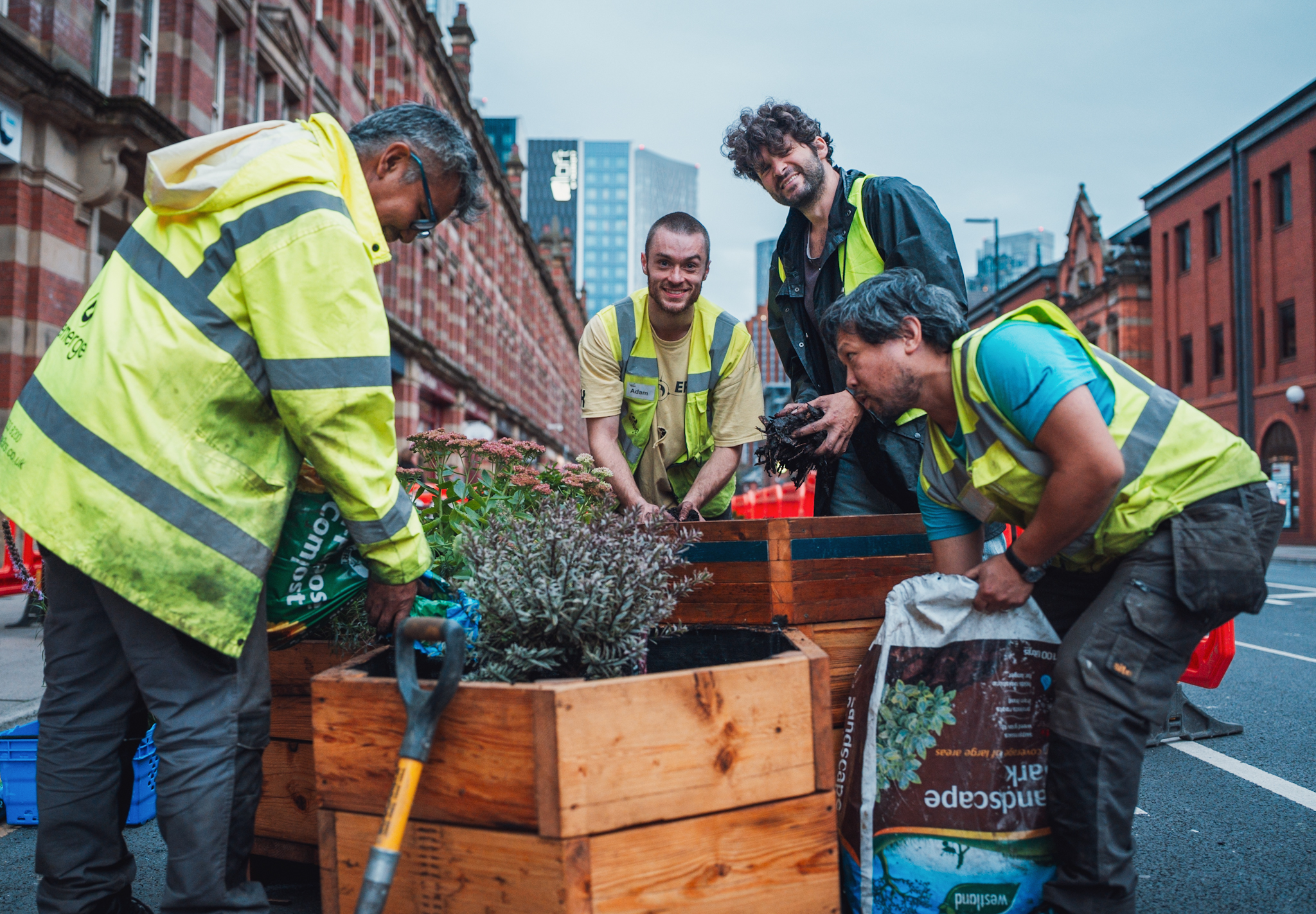
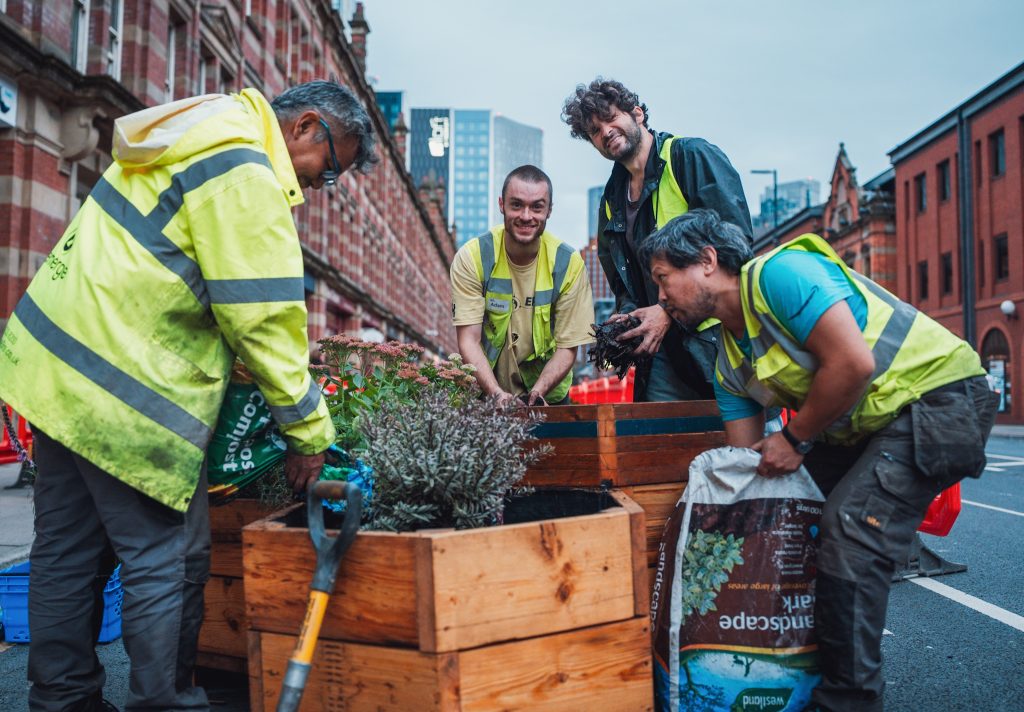
The talented team at Touch Wood have specially created our beehive planters and if you look closely, you’ll spot parts of them are made from the Velodrome track from Manchester Cycling Centre giving a piece of sporting history a new lease of life. You can read more about the wider reuse of the velodrome track here.
By making the planters from reclaimed timber, the project has saved one tonne of CO2.
EMERGE set up Touch Wood in 2012 in conjunction with the National Community Wood Recycling Project (NCWRP) to collect unwanted construction wood waste from its customers. Volunteers assist in reclaiming and repurposing the wood in return for formal training and work experience. As well as making our planters, the Touch Wood team also make upcycled products which are sold at their shop on New Smithfield Market.
The plants, including evergreens, hostas, lavender, juniper, thyme, sedums and cabbage palms, have been specially selected for the Deansgate project because they are hardy, cope well living in busy places and will provide seasonal colour and textures.
Looking after the plants and trees on Deansgate
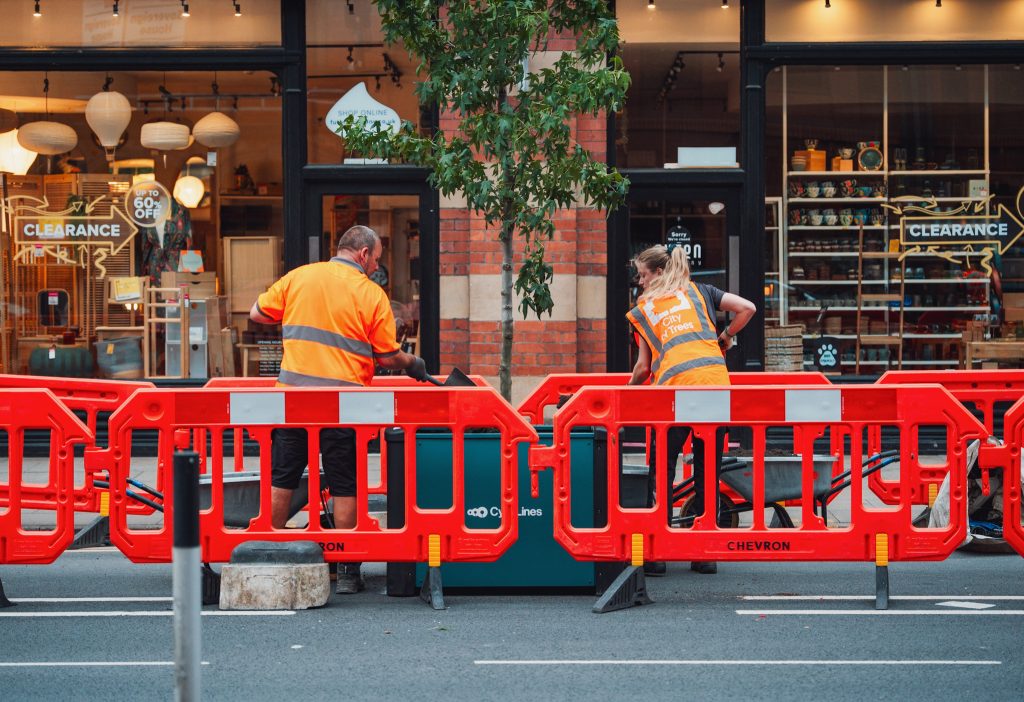
While the trees and planters are on Deansgate they will be cared for by teams from CityCo, Manchester City Council, City of Trees and the amazing on-site gardener at the Great Northern.
Bike Ports
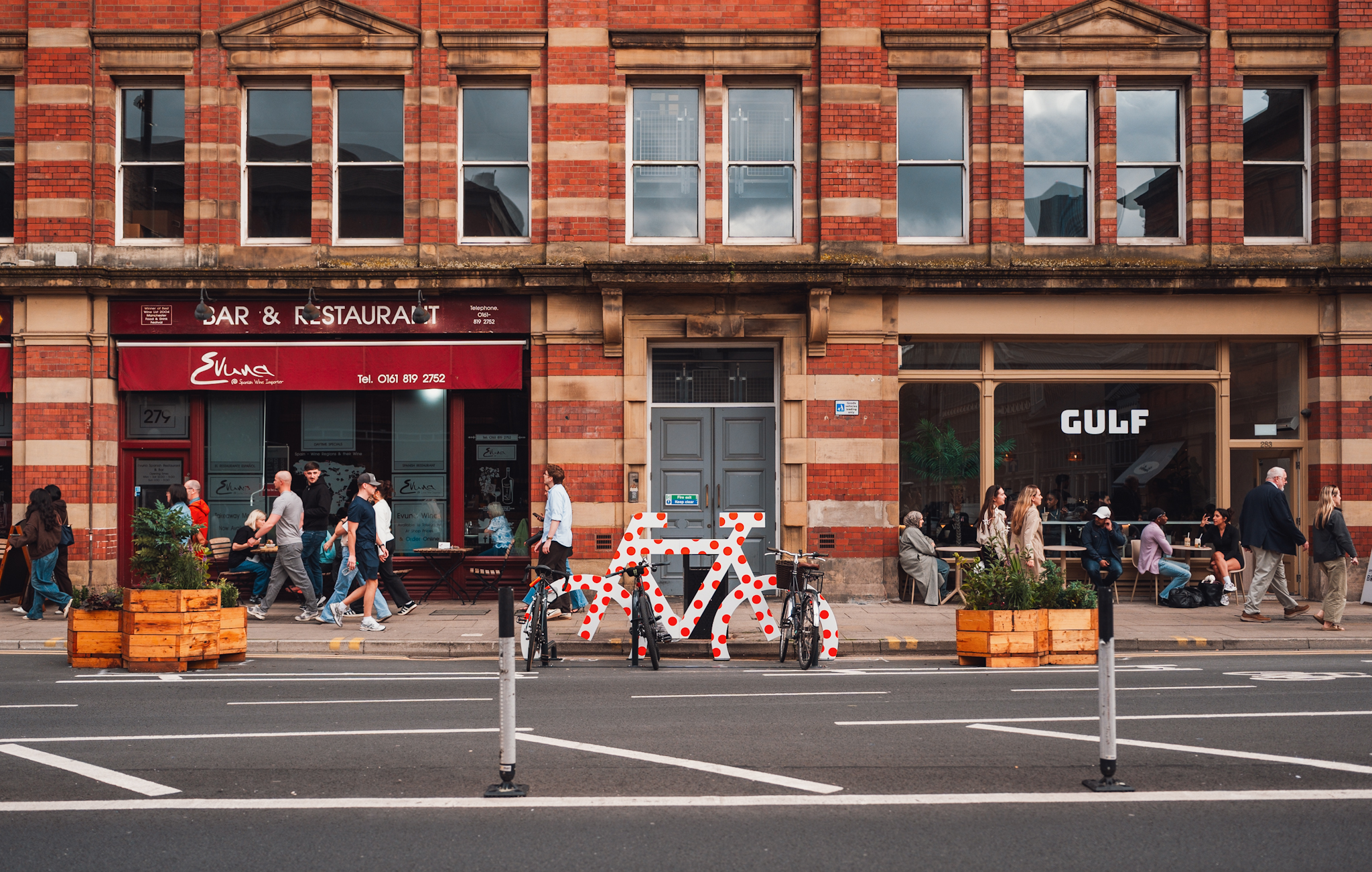
You’ll notice two brightly coloured bikes on Deansgate. While making a big impact these Bike Ports cleverly change an area the size of a single car parking space into spaces for eight cycles.
The addition of cycle parking is in reaction to the popularity of the Deansgate cycleway runs from Blackfriars in the north onto Chester Road in the south, connecting to the Chorlton Cycleway and forming a protected cycle route from the city centre to south Manchester, covering more than 4 miles (6.5 km).
In the past twelve months 1.16 million cycle journeys have been made along Deansgate (Aug 25 to July 26) that’s around 25,000 a week and between 3,000-3,500 a day! (Source is: C2-Cloud Traffic Data ©2003-2026 Drakewell Ltd)
The cycle shaped ports will be painted in Tour de France colours – one yellow and one polka dot – in anticipation of the Tour de France Femmes coming to Manchester next year with a stage finish on Deansgate.
Vote for more trees
If like us, you love to see trees and nature everywhere and you want to see more in the city, please vote below.
Our partner Manchester City Council is keen to hear your ideas for future activity and installations on Deansgate – you can complete their survey here.
Thank you
The project is a collaboration between CyanLines, Manchester City Council, City of Trees, Great Northern and CityCo and would not be possible without the support and input from lots of people, so we’d like to say a huge thank you to: the brilliant team and businesses at the Great Northern Warehouse, and all the local residents.