


CyanLines returned to Aviva Studios, home of Factory International, last night to celebrate its first anniversary and we made two major announcements: a significant charitable grant from the Bupa Foundation to the National Trust towards Phase Two of Castlefield Viaduct and plans for a new CyanLines route, CL5, which will significantly improve the experience of walking and wheeling to the Etihad Stadium and Co-op Live Arena from the City Centre through a series practical and nature led interventions.
Mayor of Greater Manchester and co-chair of CyanLines Bev Craig said: “We’re on a mission to connect our green spaces with nature across Greater Manchester.
“The ambition of CyanLines to join up our green spaces, rivers and canals is a key part of our vision to create a greener, healthier and better-connected city region. It shows what we can achieve when communities, businesses and the public and voluntary sectors come together with a shared purpose.
Phase Two of Castlefield Viaduct
National Trust is a CyanLines founding partner, supporting the development of the green and blue network to be as nature rich, accessible and inclusive as possible. Castlefield Viaduct, led by National Trust, is a signature project in the CyanLines network.
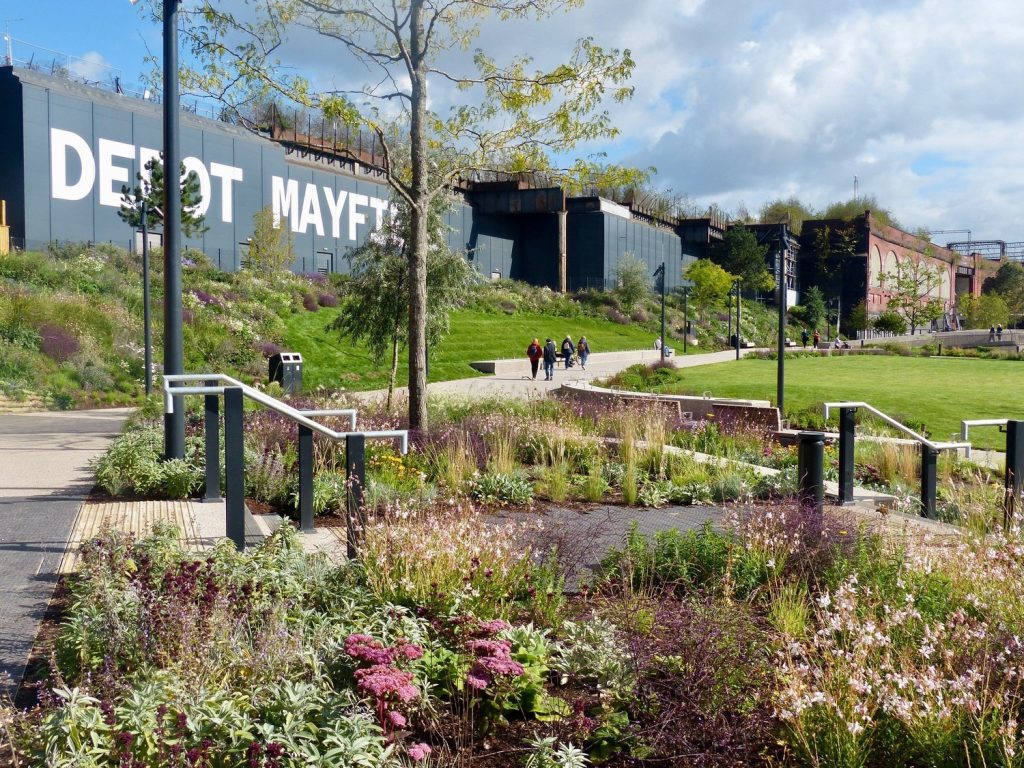
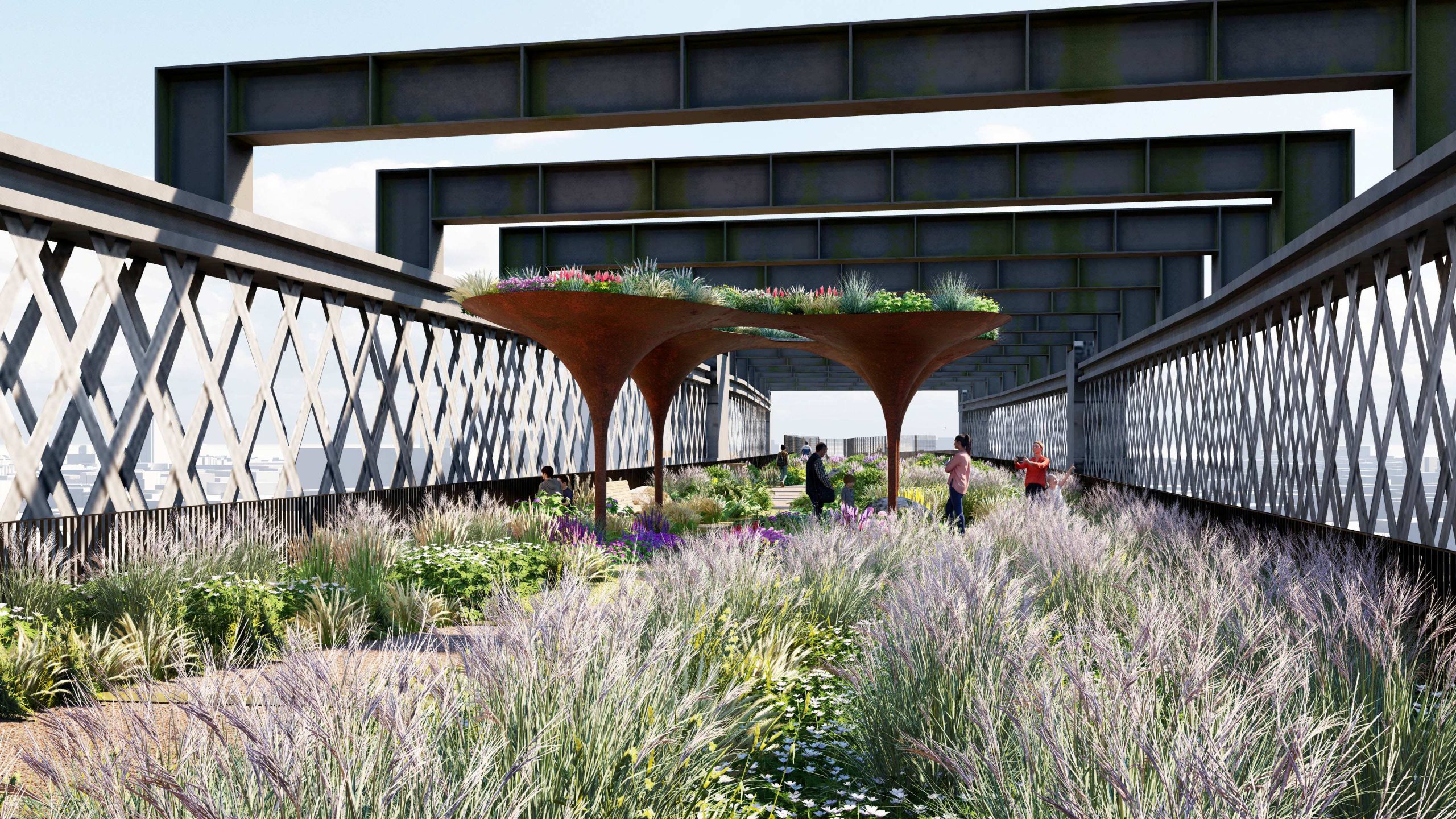
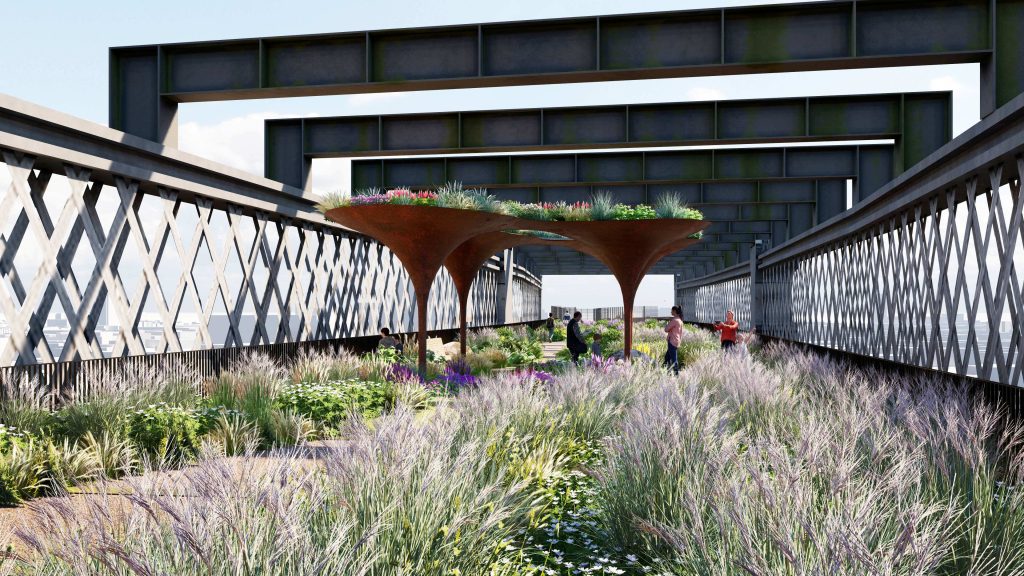
The transformation of the once-disused Victorian railway into an urban sky park leads the way in breathing new life into the city; creating an incredible space for people to explore, communities to gather, and for nature to thrive in urban spaces once more. Phase Two is the next step in enabling the 1km sky park and active travel route across the city.
The majority of the funding for the next ambitious phase of Castlefield Viaduct is secured. The National Trust is seeking a final £1.6 million in investment for it to be delivered.
Hilary McGrady, Director-general, National Trust said: “I’m pleased the Bupa Foundation are the first significant charitable grant we’ve received towards Phase Two of Castlefield Viaduct. Bupa’s funding will help the Trust extend the sky park project in Manchester, meaning more people will experience and benefit from this green space that sits in the heart of the city.
“Initiatives like Castlefield Viaduct, CyanLines and Bupa Healthy Cities demonstrate what’s possible when we work together and will have a transformative effect on the nature network and communities in Manchester. But more than that, it shows what can be done in cities right across the nation to help people and nature thrive.”
The Bupa Foundation is supporting Phase Two of Castlefield Viaduct through its Healthy Cities programme, which helps create greener urban spaces by improving access to nature and encouraging communities to get active.
Anna Russell, Director of Employee Experience, ESG and Bupa Foundation, said: “Creating healthier cities means creating places where both people and nature can thrive.
“Castlefield Viaduct is a fantastic example of how urban spaces can be regenerated to bring communities together, encourage people to be active and lead healthier lifestyles, and create more room for nature in our cities. Bupa is a major employer in Greater Manchester, and we’re delighted to support a project that will leave a positive legacy for local people and the environment.”
CL5 – Piccadilly to the Etihad Campus loop
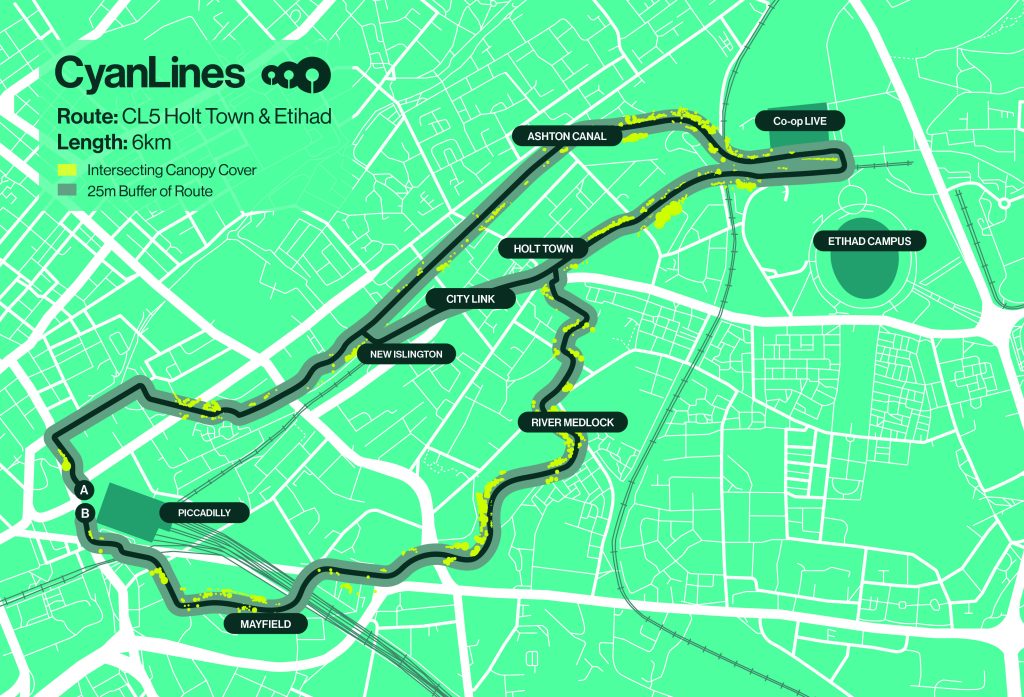
Plans have been in development for the 3.7 mile (6 km) CL5 circular route over the past twelve months CyanLines and its partners Manchester City Football Club, Manchester City Council, Co-op Live and the Canal & River Trust have co-designed the route with community groups, young people and students from the Norman Foster Institute for Sustainable Cities through a series of design workshops and walks.
The plans for route CL5 include:
- New play parks for children.
- Spots for grown-ups to rest.
- Extensive tree planting and the addition of rain gardens, wildflower meadows and green walls to encourage wildlife and enhance biodiversity.
- Access to the Etihad and Co-op Live Arena (Joe Mercer Way) from the Ashton Canal will be made significantly easier through the installation of a wheelchair friendly alternative.
- Physical barriers along the route will be removed to improve access for everyone.
- Lighting, surfacing and wayfinding along the whole route will be completely overhauled.
Pete Bradshaw, Director of Sustainability, Manchester City Football Club said: “The plans for the CyanLines route add a new layer of nature rich, innovative and imaginative active travel and community experiences for fans, visitors and those living and working in the neighborhood. Improving local ecology, biodiversity gain and creating environmental uplifts that have a positive impact across the community, supporting improved air quality and wellbeing.
“This builds on over a decade of environmental improvements the club has made in east Manchester, returning former industrial lands to green and blue spaces and through its sustainability agenda (Game Plan), the biodiversity programme’ Mancgroves,’ continues to expand and provide new wetlands, wildflower and wild grass meadows and rain gardens and wetlands that help prevent local flooding – all engaging our schools, communities.”
The Etihad Stadium recently expanded capacity to just over 60,000 with the opening of its new Pep Guardiola stand. It’s set to expand further with the upcoming Medlock Square which will feature a covered fan park for around 6,000 people meaning matchdays and tournament fixtures will routinely draw tens of thousands of visitors to the campus in concentrated time windows. The Co-op Live Arena is projected to host around seven million visits per year, and Medlock Square’s new offerings – including the 600-capacity Mamma Mia: The Party venue, a 3,000-capacity event space, a major new hotel, and series of cuisine offerings – all will further intensify footfall in the area.
The CL5 route begins at Piccadilly station and follows the Ashton Canal through New Islington and Holt Town to the Etihad Campus including Co-op Live Arena, then it loops back towards the city centre joining the existing CityLink before heading through Medlock Valley to Mayfield then back to Piccadilly station.
Mayor of Greater Manchester and co-chair of CyanLines Bev Craig said: “The new route between Piccadilly and the Etihad Campus is a really exciting next step. By making it easier to walk and wheel, removing barriers and bringing more trees, wildlife and welcoming public spaces along the way, CyanLines is turning that vision into reality.”
CyanLines is the nature-powered partnership project aiming to connect blue and green spaces into a high quality network of walking, wheeling and cycling routes for residents, for visitors and for nature.
The long term vision is to develop a network of hundreds of miles of CyanLines routes over ten years, starting with the city centres of Manchester and Salford and then stretching out across Greater Manchester to deliver a greener, healthier and more climate-resilient city for the future.
Tom Bloxham CBE, co-chair, CyanLines said: “The enormous progress made in our first year, from a standing start and a simple idea, reflects the huge amount of support, collaboration and cooperation we have received from across communities, residents, businesses, charities and politicians to turn our ambitious vision into reality. If you ever wanted an example of “Manchesterism” Surely this, is it – an entrepreneurial coalition of local politicians, business people and community volunteers getting stuff done at a pace .
“We still have a very long way to go but each year we’ll report back on our progress as we hope to engage more and more people to bring green and blue nature and walkways into the heart of our City”